Hobby Middle School
Cody Crow, LV Crane & Rigging
In the construction and heavy equipment industry, proper planning is just as important as completing the work itself.
One of the most valuable tools we here at LV Crane have learned to use is the 3D lift planning program. This software
allows us to create detailed lift plan before any equipment arrives on the jobsite. By using this technology, I was
able to demonstrate our knowledge of safe lifting practices and professional planning, which ultimately helped us earn
this job pulling air conditioning units off the top of Hobby middle school.
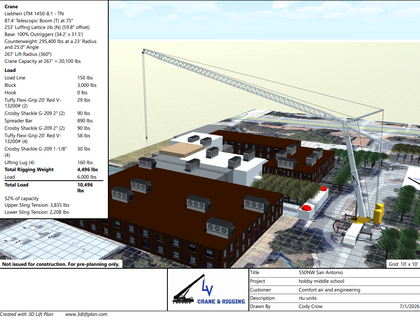
Before the project began, I used the 3D lift planning program to map out the entire lift. I entered the crane specifications,
load weights, boom length, radius, and jobsite conditions into the software. Including a picture of the actual school off of
Google Earth. The program created a visual representation of the lift, allowing everyone involved to see exactly how the
crane would operate. This made it much easier to identify potential hazards, verify that the crane had enough lifting
capacity, and ensure there would be no interference with nearby buildings, utilities, or other obstacles.
Presenting a professional lift plan showed our customer that we understood the importance of preparation and safety.
Instead of relying on estimates or making decisions on the day of the lift, I was able to provide accurate information
that gave the project team confidence in our abilities. My attention to detail and commitment to safe planning played a
major role in being awarded the job to set the air conditioning units on top of the school. Specifically because the school
was still in session when the crane was being built and making the lifts.
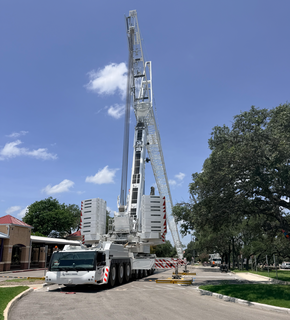
The project also reinforced the importance of implementing safety into every stage of our work. Because the lift plan had
already identified the safest crane location, lifting sequence, and operating radius, our crew was able to work more
efficiently while reducing unnecessary risks. Everyone understood their responsibilities before the first lift was made.
Communication improved because the entire team reviewed the 3D plan together and discussed any concerns before work began.
Using the lift planning program also helped us comply with industry safety standards. Planning ahead reduced the chance
of overloading the crane, striking nearby structures, or placing workers and pedestrians in hazardous positions. Instead
of reacting to problems during the lift, we prevented many of those problems through careful planning. This proactive
approach created a safer jobsite for both our crew and the school staff and students in the surrounding area.
Overall, using a 3D lift planning program is one of the most valuable experiences in my professional development. It has
helped us secure many jobs that were questionable to the customer on how it could be done, while proving the value of
preparation, communication, and safety. My experience through out my career has taught me that successful lifting operations
depend on more than operating a crane, they require careful planning, teamwork, and a commitment to protecting everyone
involved. Using 3D lift planner has just added to the service and expertise we offer. We will continue to use lift the
planning software on future projects because it improves safety, increases efficiency, and demonstrates professionalism
to customers and employers.